Better Brick
Handel Architects have designed a lot of brick buildings. A continuation of ancient building traditions that began nearly 9,000 years ago. Masonry’s rich history and versatile utility means it will continue to be part of our practice for decades to come. Clients and designers are drawn to brick because it is durable, contextual, affordable, has a high thermal mass, and offers enough design flexibility to create expressive and dynamic facades. Plus, it has the often-overlooked benefit of being reusable and 100% recyclable.
Are bricks sustainable?
Bricks are made from clay, shale, sand, and water. While these materials are all naturally occurring, they are not rapidly renewable and require extractive processes that damage and pollute ecosystems. Manufacturing also requires high heat for long durations meaning it is an energy intensive, often fossil fuel-powered, process. These impacts can be reduced through electric kilns powered with renewable energy, implementing regenerative land management, and pollution control measures (e.g., capturing and treating water runoff onsite). However, as long as NEW bricks are manufactured from non-renewable resources (clay takes hundreds of thousands of years to regenerate), their use will result in some level of environmental degradation.
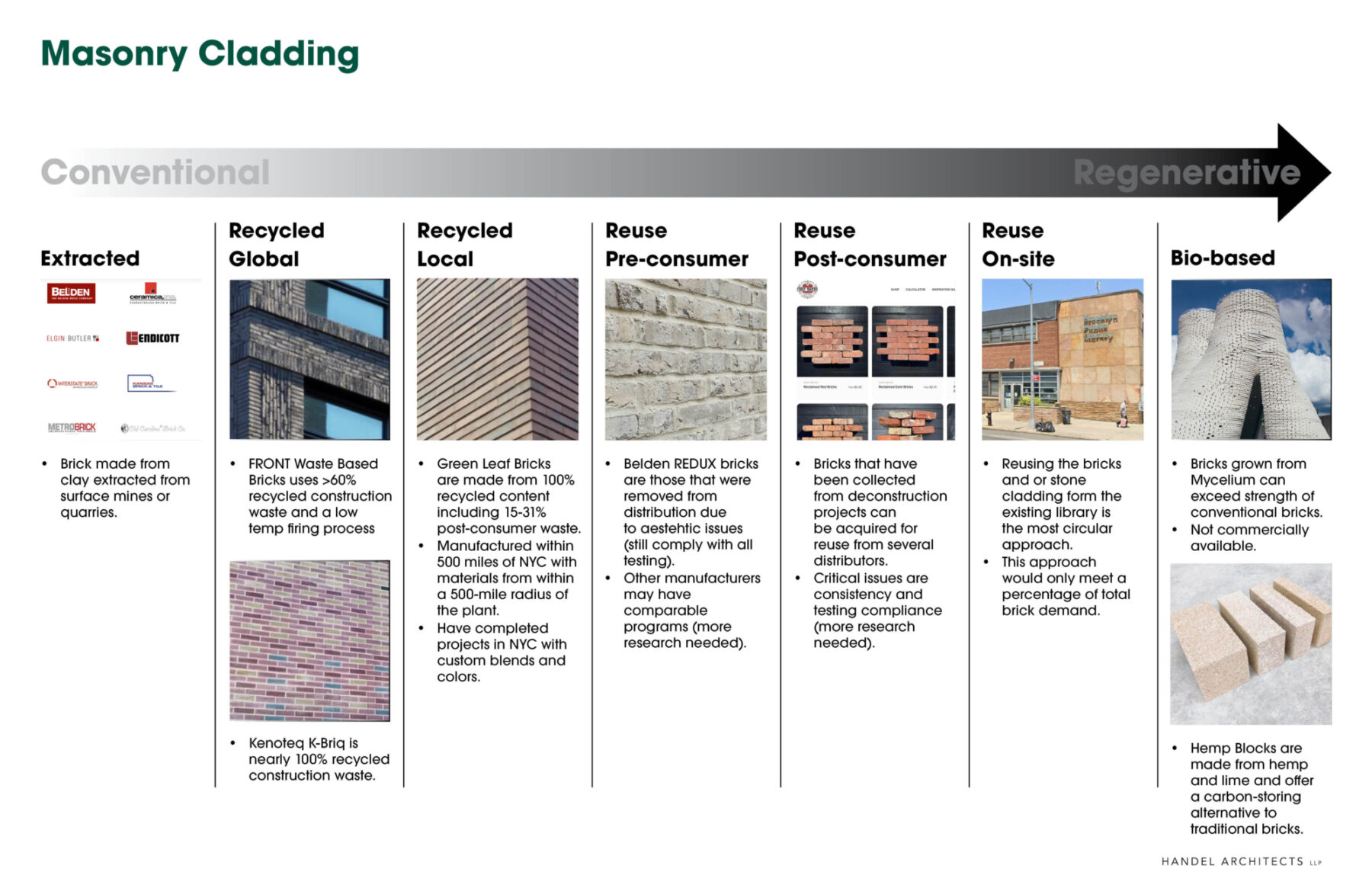
This does not mean we should stop using brick and give up on the many benefits it offers. Instead, we should start to rethink how we create and source brick. Bricks are both reusable and recyclable. They are also a composite material created by combining several feedstocks. These material conditions open several avenues for innovation when it comes to brick sourcing. The diagram below looks at options on a scale from conventional to regenerative
Push the limits
Every material selection is an opportunity to drive our industry toward a regenerative future. Consider the following strategies on your next brick project:
- Recycled bricks: The best option we are aware of on the East coast is Green Leaf Bricks which are made from 100% recycled materials including clays and industrial waste streams like catalytic converters. Comparable price to a mid-tier brick from Belden or Glen-Gery and have done several NYC projects. Other options can be found in European products like K-Briq and Waste Based Bricks from Front.
- Reclaimed bricks: Belden sells bricks that were pulled from the line for one reason or another through their Redux program. You can also find various marketplaces for used bricks. Testing and consistency are key challenges for the latter. The best solution is reusing bricks from your site if another building is being demolished.
- Bio-bricks: The regenerative future requires rapid renewability. Bricks made from mycelium, algae, or other bio-based materials have been prototyped, with some demonstrating comparable strength and fire-resistance to clay brick. Many of these products are inching their way through to commercial viability, but some, like products are made from hemp, are available today.
Get Creative
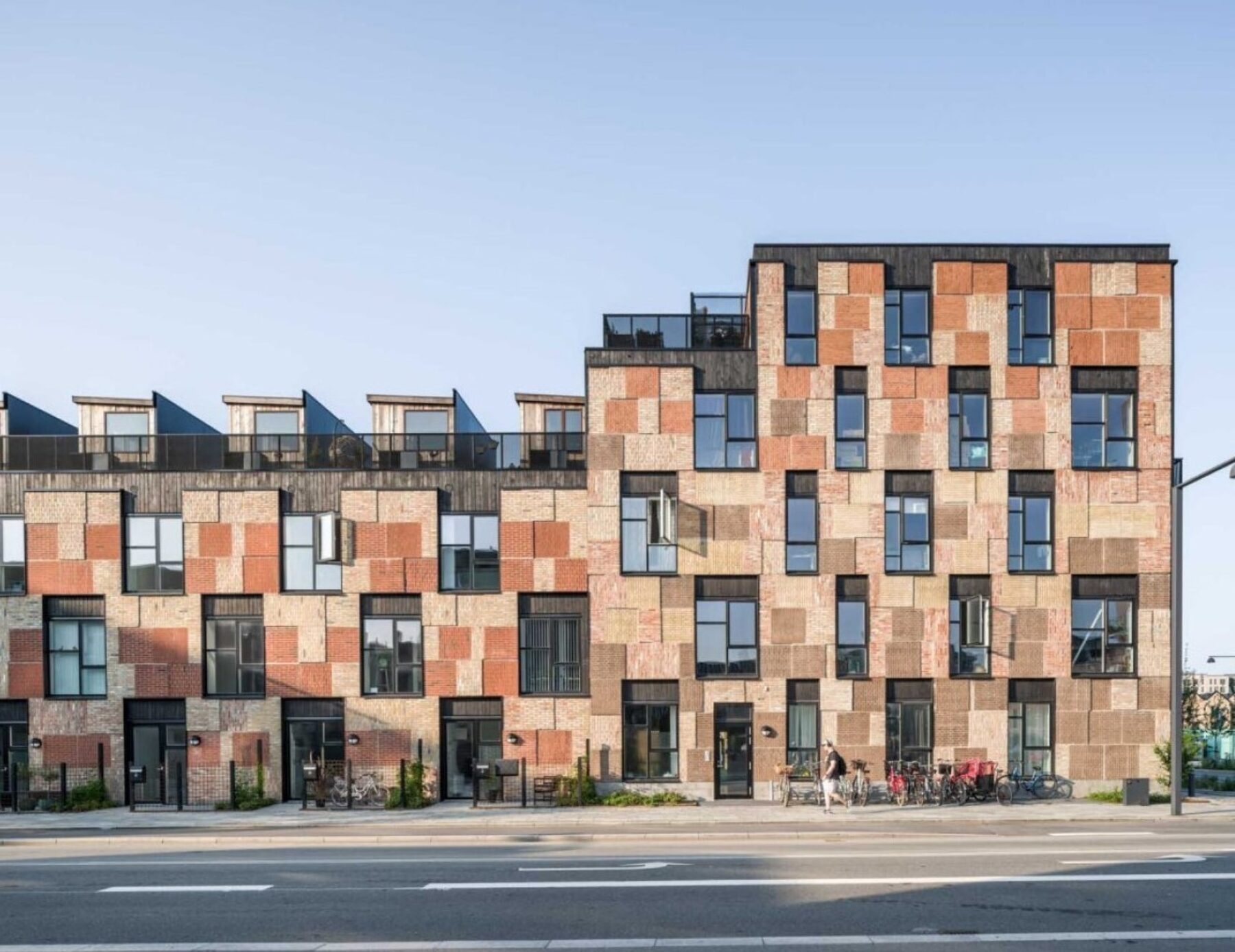
The best solution is likely still to come. So, don’t be afraid to get creative. For some inspiration check out the Resource Rows housing by Lendager. Rather than reuse brick by brick, the team here created a process for cutting panels of brick from soon to be demolished structures. This allowed for reuse to occur at a much greater speed with less preparation and cleaning of the reused material. Plus, the result is beautiful IMO.